
How YellowBIRD is Rewiring Last-Mile Delivery in Uganda

The Delivery Force Behind MoMo Market Uganda
November 25, 2024
The People Behind the Parcel:
April 17, 2026

Logistics in Uganda is not a simple problem. Roads vary. Addresses are informal. Customer expectations are rising fast, while operational costs are punishingly high. For years, businesses across the country have tried to solve last-mile delivery with manual dispatchers, phone calls, and gut instinct. The result: missed deliveries, angry customers, and revenue left on the table.
YellowBIRD stages with a different thesis: that the only way to reliably move thousands of parcels a day is to build technology that eliminates the guesswork entirely. Today, that thesis has been validated and the company’s approach offers a compelling blueprint for what modern logistics looks like on a continent that can’t afford to wait for slow-moving incumbents to catch up.
The Problem That Couldn’t Be Patched
Before diving into what YellowBIRD does, it helps to understand the scale of the problem it is solving. Across Uganda and its emerging markets, logistics is routinely cited as one of the top constraints on business growth. It’s not one problem it’s a cluster of interconnected failures.
Deliveries are delayed because dispatch and riders operate on disconnected systems or no systems at all. Customers have no visibility into where their package is or when it will arrive. Businesses managing in-house fleets face crushing overhead: vehicle maintenance, driver wages, fuel, and the invisible cost of poor routing. Returns and reverse logistics are often an afterthought, leading to inventory losses that quietly erode margins.
The fragmentation of Uganda’s logistics sector isn’t just inconvenient f it’s a growth ceiling. Every manual handoff is a place where an order can fail, a customer can be lost, and a business can stall.
YellowBIRD understood that you couldn’t fix this with a slightly better spreadsheet or a WhatsApp group. You needed to rebuild the operating logic of delivery from the ground up starting with data, automation, and a system that gets smarter with every order.
The Architecture: How the System Actually Works
At its core, YellowBIRD operates as a technology-driven logistics ecosystem. But what does that mean in practice? The best way to understand it is to trace a single order through the system — from the moment a customer taps “Buy” to the moment a rider hands over the package.
Step 1 — The Order ArrivaI
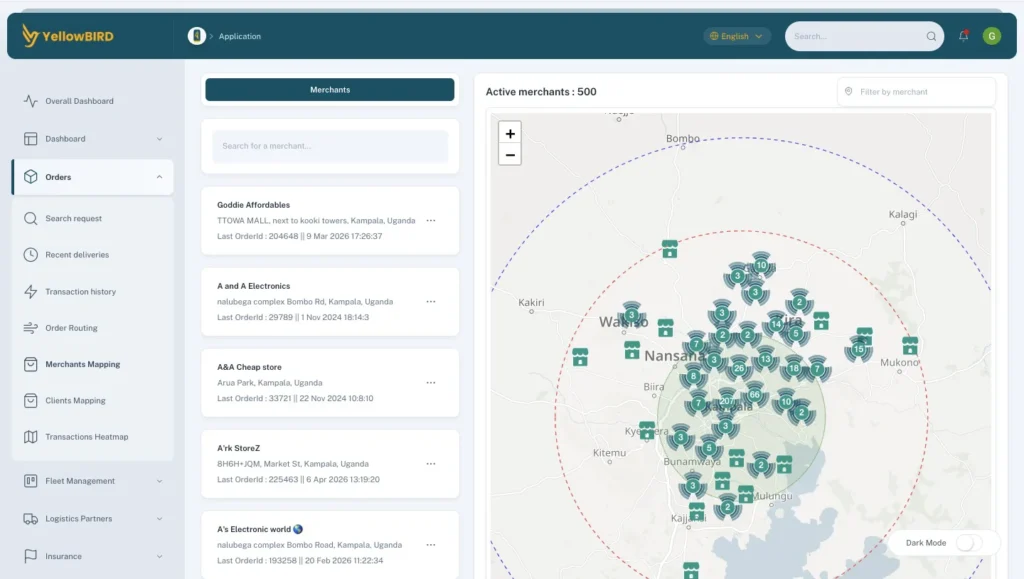
YellowBIRD’s platform integrates directly with its clients’ systems through a robust API. When a customer places an order on a partner platform, that order data including the customer’s location, the merchant, and the items flows instantly into YellowBIRD’s Logistics Management System (LMS). No manual data entry. No re-keying of information. The handoff is automatic and immediate.
Step 2 — The Operations Dispatch
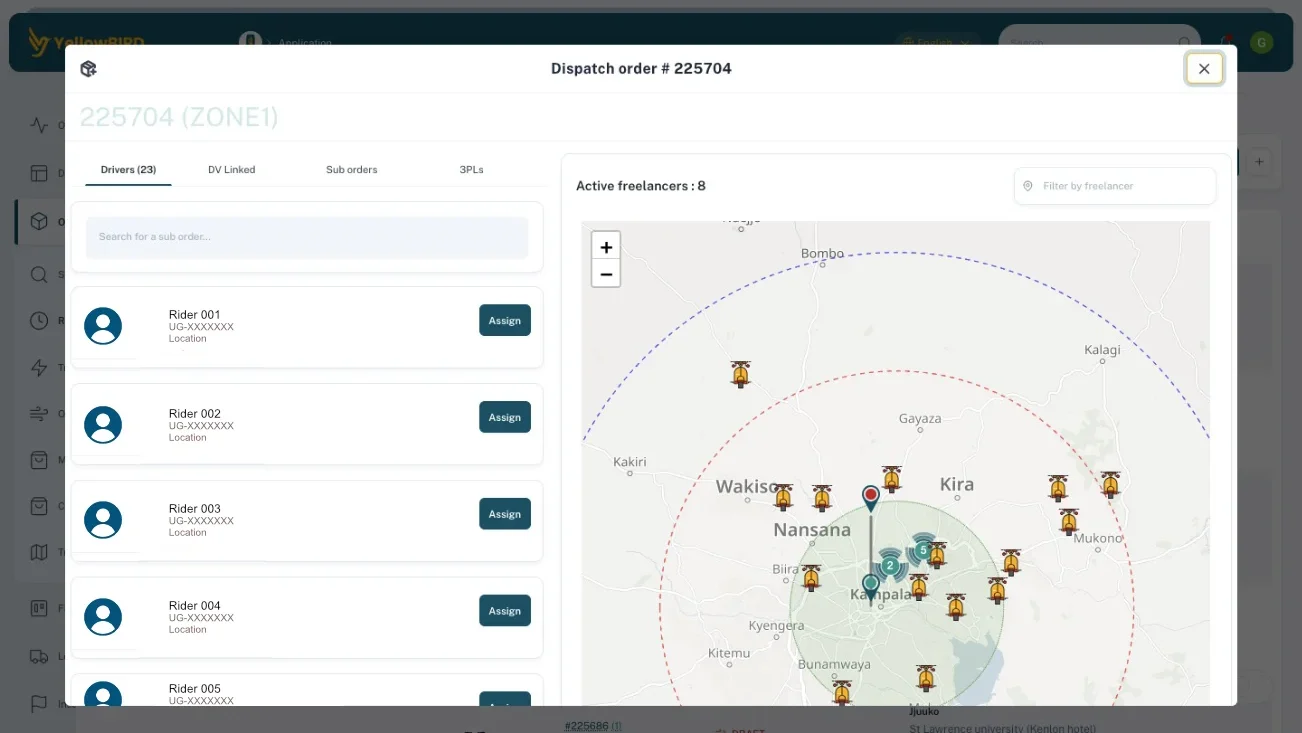
Inside YellowBIRD’s operations center, a live dashboard gives the operations manager a real-time view of every incoming order, every active rider, and every delivery zone. This is command-and-control for logistics a single screen that turns complexity into clarity. The manager can see at a glance where orders are clustering, where riders are available, and where the day’s pressure points are building.
Step 3 — The Rider’s Mobile App Closes the Loop
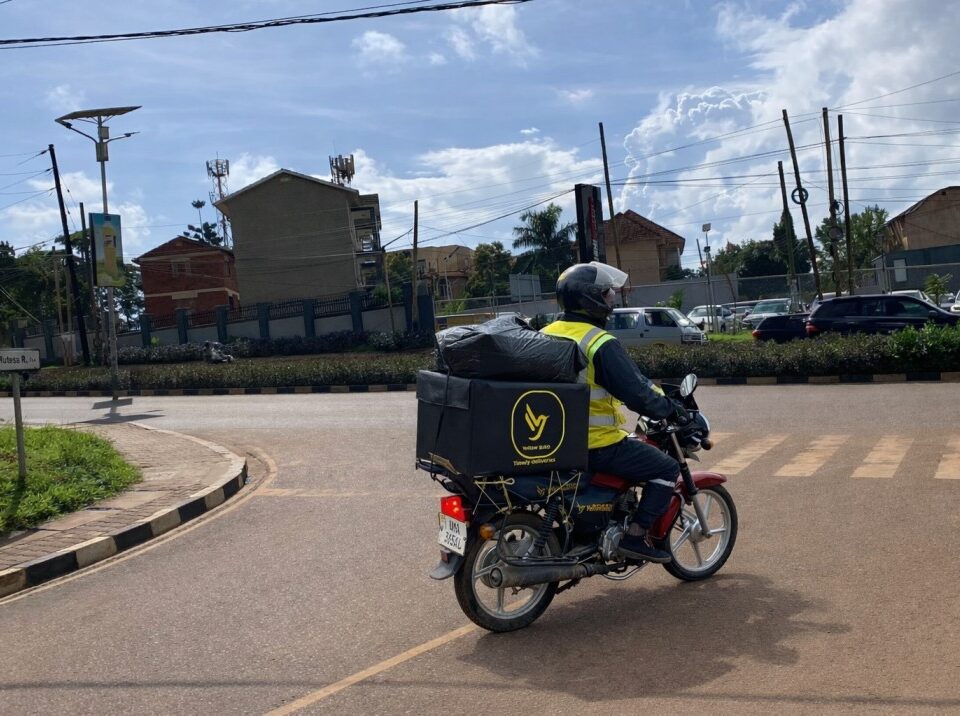
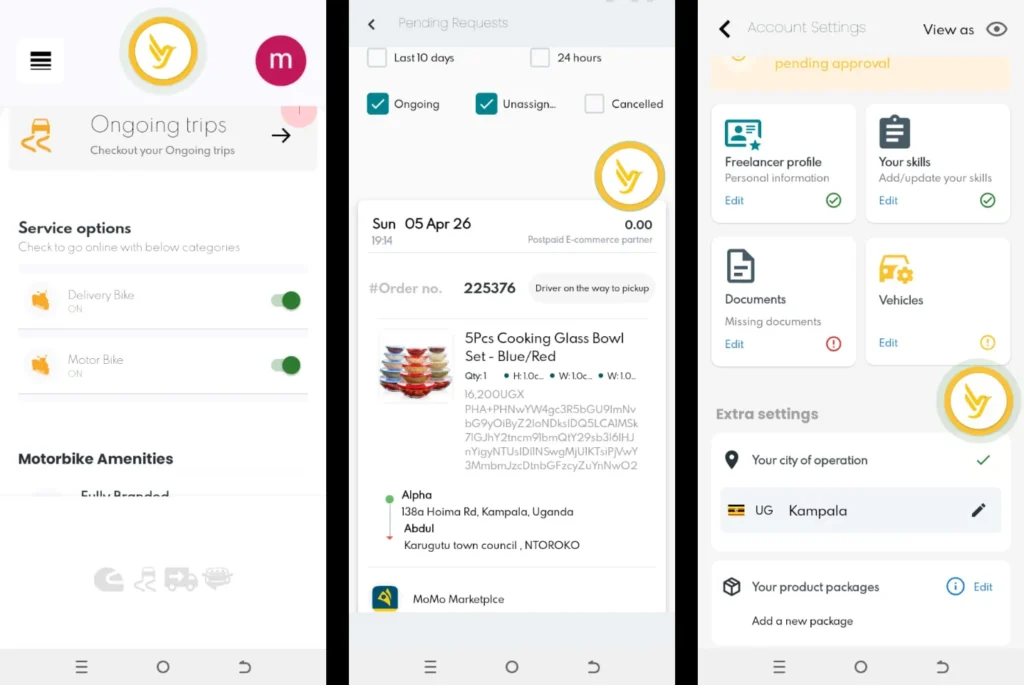
The rider doesn’t wait for a phone call or a text message. The order with full merchant details, pickup location, and customer delivery address arrives directly on their YellowBIRD mobile application. They navigate to the merchant, pick up the item, and deliver it to the customer. Every step is tracked in real time. Every delivery generates a confirmation alert. The loop is closed, the data is captured, and the next order is already in the queue.
MoMo Market: A Case Study in Scale
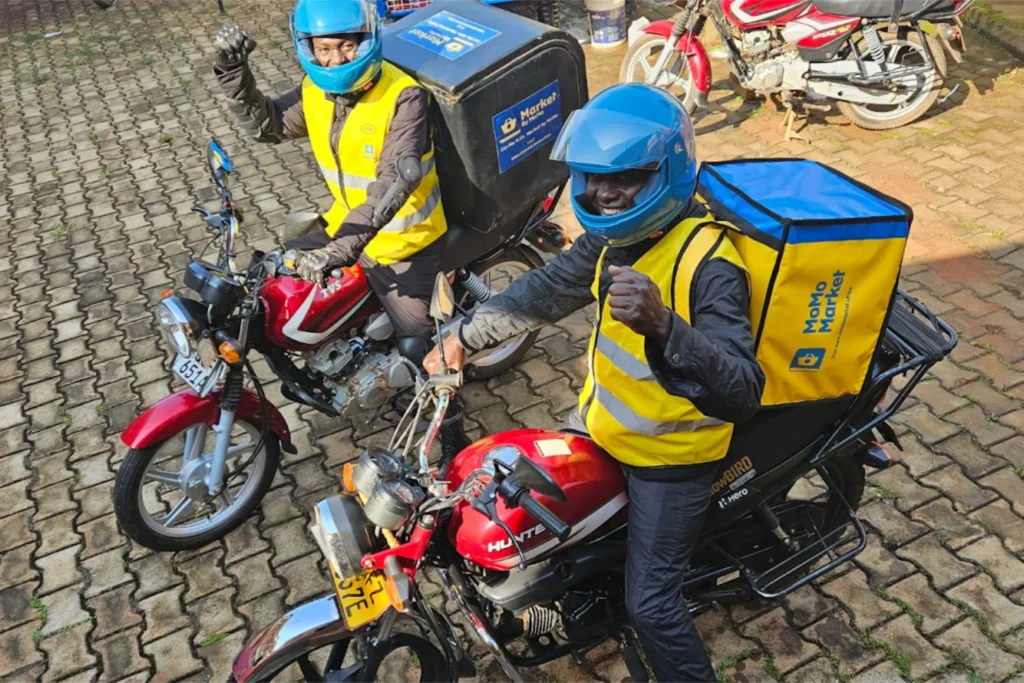
Theory is one thing. Execution at scale is another. YellowBIRD’s most significant proof point today is its partnership with MoMo Market, an e-commerce platform that integrates hundreds of merchants, enabling customers to browse and buy from a wide range of sellers through a single digital storefront.
For MoMo Market, the logistics layer is not an afterthought it is the product. A customer who orders from three different merchants on the platform expects their items to arrive reliably, quickly, and with full visibility. YellowBIRD’s API integration makes this possible at a scale that would be impossible to manage manually.
When an order is placed on MoMo Market, it flows immediately into YellowBIRD’s system. The customer’s location is identified from the information shared at checkout, the correct zone is determined, and the right rider is assigned. The merchant is notified, the rider dispatched, and the customer can track progress in real time. What happens behind the scenes the routing logic, the zone matching, the data flowing between systems is entirely invisible to the customer. Which is exactly how it should be.
Beyond Delivery: The Full Logistics Ecosystem
Last-mile delivery is YellowBIRD’s most visible capability, but it is far from the only one. The company has built a full logistics ecosystem designed to handle every stage of the supply chain that sits between a merchant’s warehouse shelf and a customer’s front door.
YellowBIRD’s Core Service Suite
- Logistics Automation & API Integration — Full automation connecting e-commerce platforms, call centers, inventory systems, and rider-route distribution. Automated order dispatch, real-time dashboards, and seamless external system integration.
- Warehousing & Fulfillment — Inventory storage, order picking and packing, and dispatch coordination powered by a Warehouse Management System (WMS) with full inventory visibility.
- Returns & Reverse Logistics — A structured system for product pickup, warehouse return handling, inspection, and sorting — reducing losses and rebuilding customer trust in online shopping.
- Delivery Intelligence & Customer Experience — Real-time tracking links, customer feedback collection, and performance analytics dashboards that turn delivery data into actionable insights.
The Bigger Picture: Logistics as Infrastructure
There is a tendency to view logistics companies as service providers useful, but ultimately supporting a more important business elsewhere. YellowBIRD’s architecture challenges that framing. When your logistics platform is the API layer that connects merchants to customers, when it is the system that makes e-commerce possible at scale, it stops being a service and starts being infrastructure.
For the businesses that rely on YellowBIRD e-commerce platforms, FMCG distributors, telecoms, growing SMEs the logistics layer is increasingly indistinguishable from the business itself. A retailer that can promise same-day delivery and back it up, every time, has a fundamentally different competitive position than one that cannot. YellowBIRD is in the business of manufacturing that competitive advantage.
Uganda’s e-commerce sector is growing. Consumer expectations are rising. The businesses that will win are the ones that invest in the infrastructure layer now the warehousing, the API integrations, the last-mile networks, the returns management before the competition catches up. YellowBIRD’s bet is that this infrastructure is most powerful when it is shared, optimized, and technology-driven, rather than fragmented and manual.
Seven years in, the evidence is accumulating. Thousands of orders move through the system every day. Merchants on MoMo Market can reach customers across the city without managing a single rider. Customers get delivery confirmation alerts instead of unanswered phone calls. The loop closes, reliably, at scale.
That is what it looks like when logistics works. And in Uganda right now, it is rarer and more valuable than it should be.